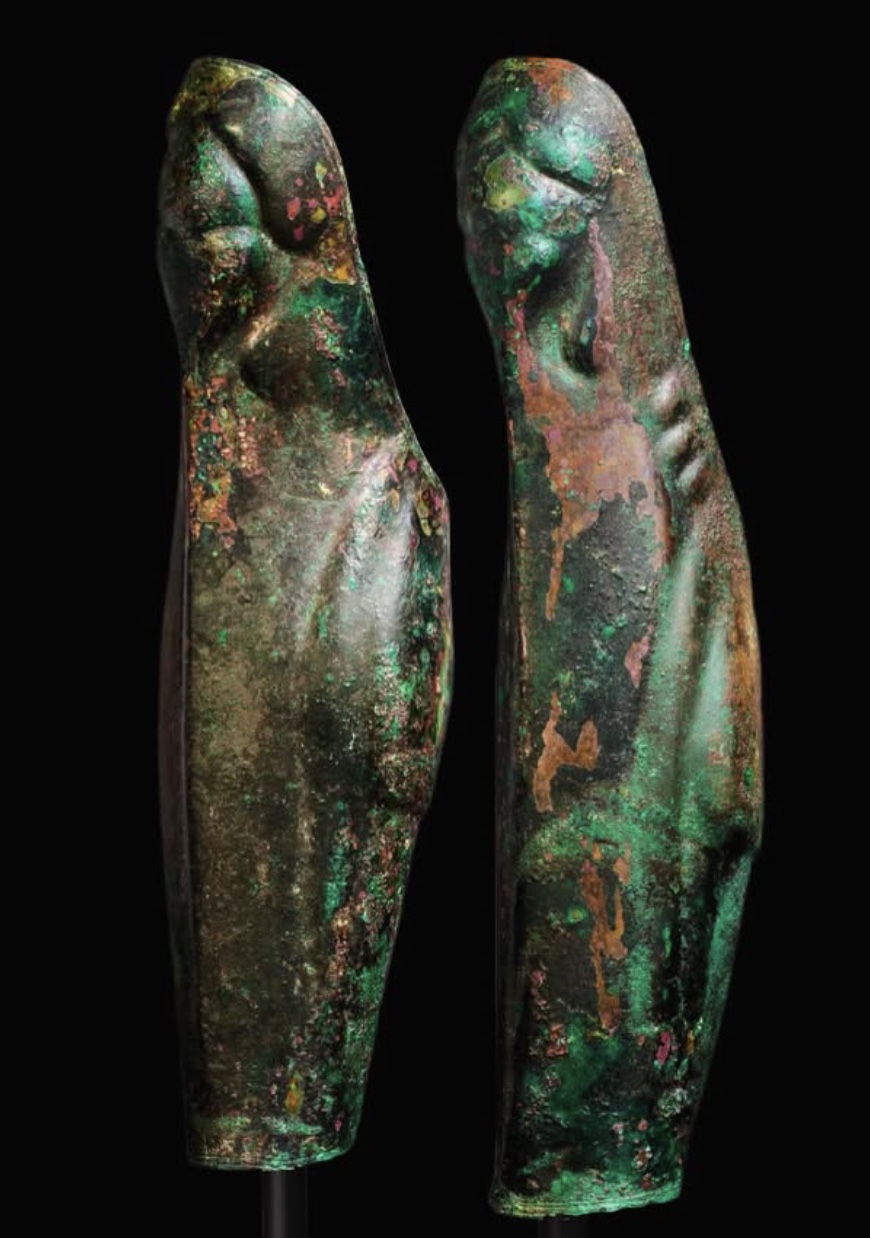
I find greaves to be the least appreciated bits of ancient armour by us moderns. And sure, these shinguards were not necessarily the sexiest aspects of a warrior’s apparel, nor the most prominent (what can be more prominent than a big shiny be-plumed thing worn on the head, for instance?!).
These are especially excellent examples, giving any soldier’s calf a chiselled veneer. The fibularis longis and gastrocnemius so mightily toned and the anatomy of the knee, carefully rendered, so very vulnerable….
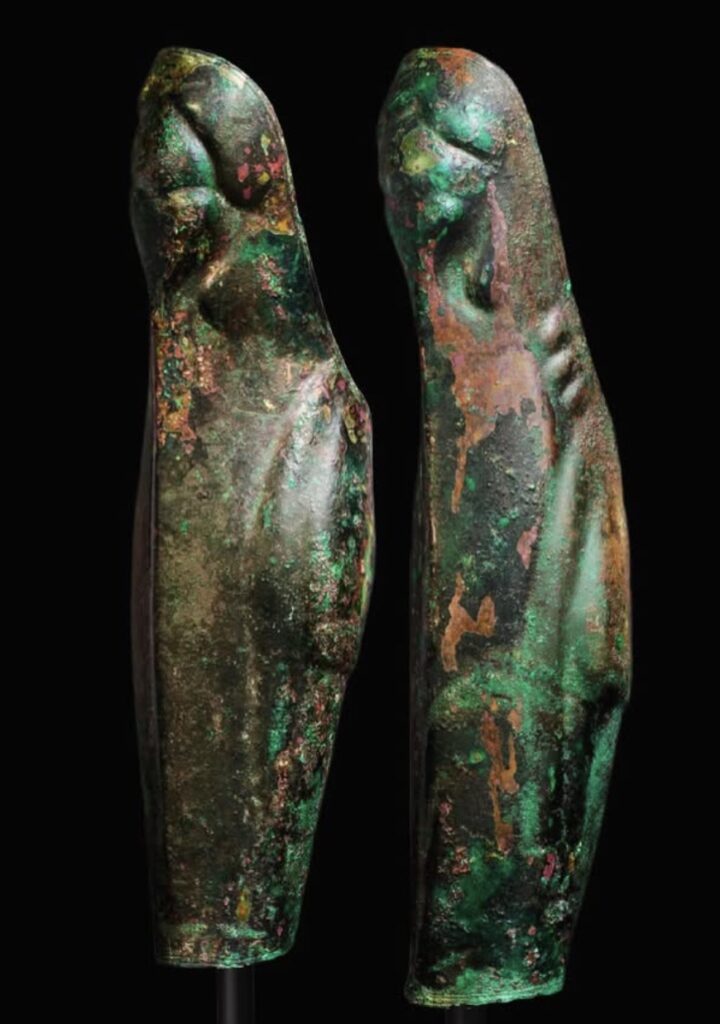
Ancient warriors and artists seem to have a keen interest in greaves. And frequently (I find this incredibly poignant somehow despite the impending accidental pun) they seem to have a significant role in grieving when a warrior has died abroad. In such cases, the greave(s) was often the only part of the panoply to be retrieved and buried in a cenotaph on home turf.
Vase painters often included the moment of putting the greave on the shin as a central aspect of arming scenes – moving in the extreme as the warriors in such scenes are about to face extreme peril. Consider the reverse of the ‘Euphronios Krater’, for instance: girding one’s loins and shins for battle? Lots to think about…
(These greaves were recently part of the Hellenic Museum in Melbourne’s Heroes and Hoplites exhibition and currently on display there, no. L.2024.5.H. I’ve never been, but so appreciate their programming and website!